


100-word bio: (Full bios available here)
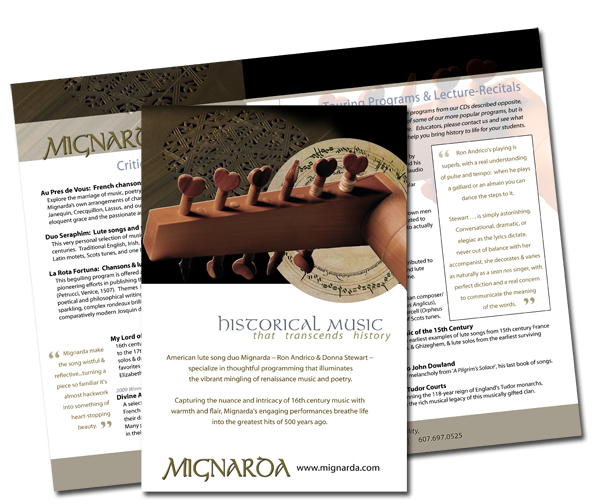
America's premiere professional lute song duo, Mignarda specializes in thoughtful programming illuminating the vibrant mingling of renaissance music and poetry. Noted for awakening modern audiences to an appreciation for historical music, their work encompasses concertizing, teaching and recording, with seventeen critically-acclaimed CDs. Mignarda's publications include a series of 18 music editions, scholarly articles, reviews and the internationally-popular blog, Unquiet Thoughts. The couple met in a schola providing liturgical music for the Latin Tridentine Mass, and they continue their dedication to historical sacred and secular music. Now in their 20th year as a duo, Mignarda is based in Cleveland Heights Ohio.
LINKS:
Mignarda's web site: https://www.mignarda.com
Mignarda discography: https://www.mignarda.com/cds/
Mignarda Editions: https://editions.mignarda.com
Unquiet Thoughts, Mignarda's blog: https://mignarda.wordpress.com
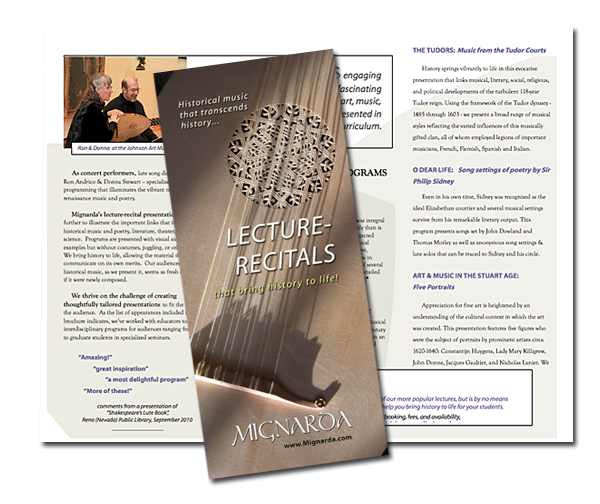
Mignarda, based in Cleveland Heights, Ohio, is available for concerts, house concerts, lecture-recitals, or in a format tailored to meet your needs.
Please contact us for details & terms.
LOW-RESOLUTION IMAGES FOR WEB:
(save images directly from this page)
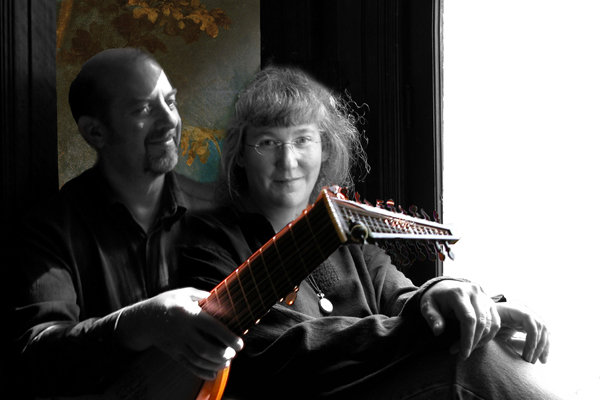
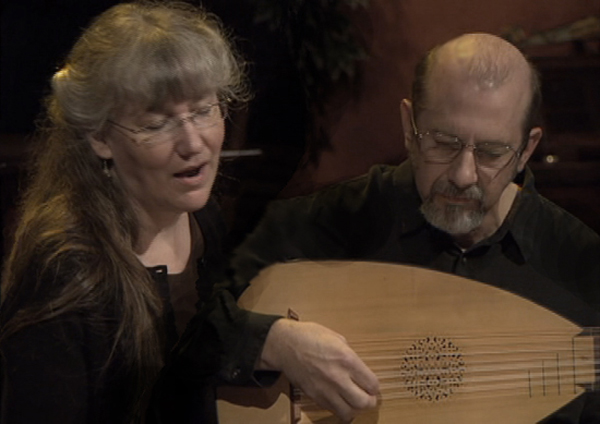
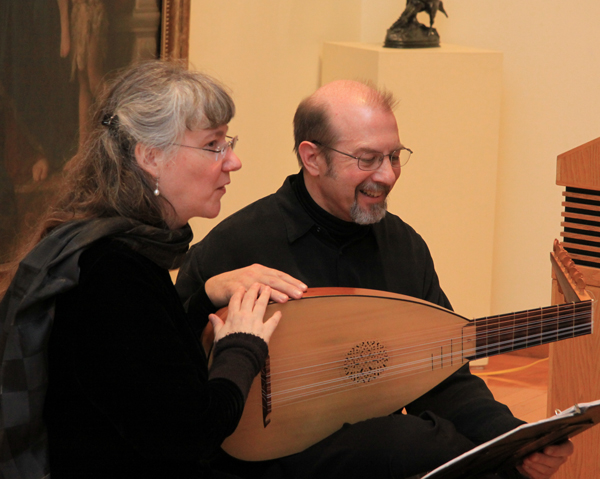
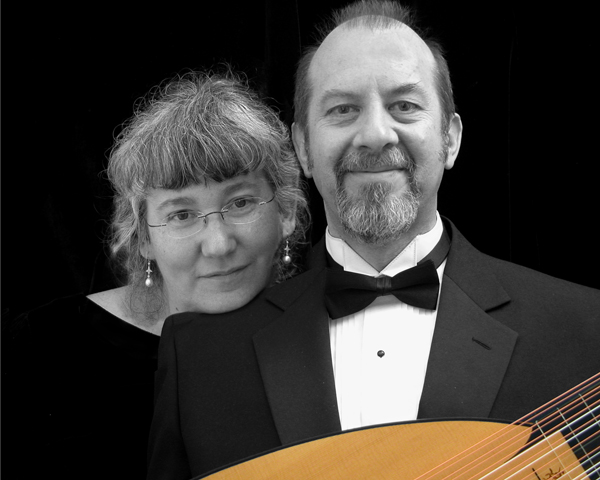
HIGH-RESOLUTION IMAGE FOR PRINT
(click to load full-size image, then save)

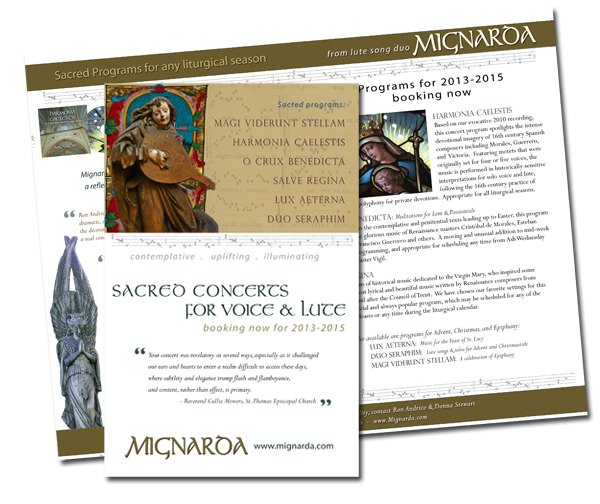
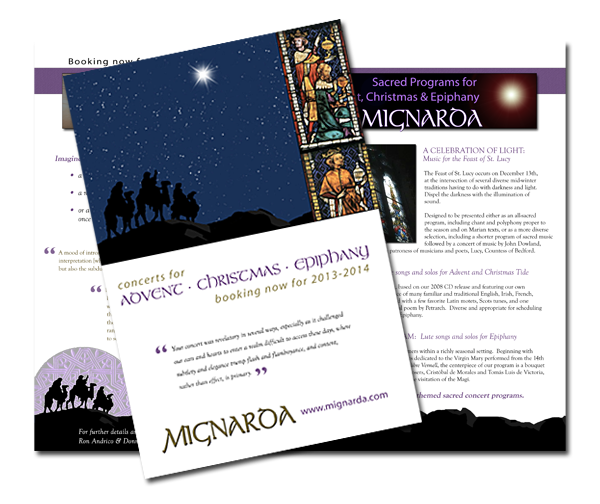
BROCHURES
contact us to request a hard-copy press kit, including these brochures, reviews, press clippings, and a sample CD.
 COMMENTS FROM